Machi no Zukoushitsu
A community design project turning a vacant shop into a town-wide living museum to address unwanted loneliness and social isolation.
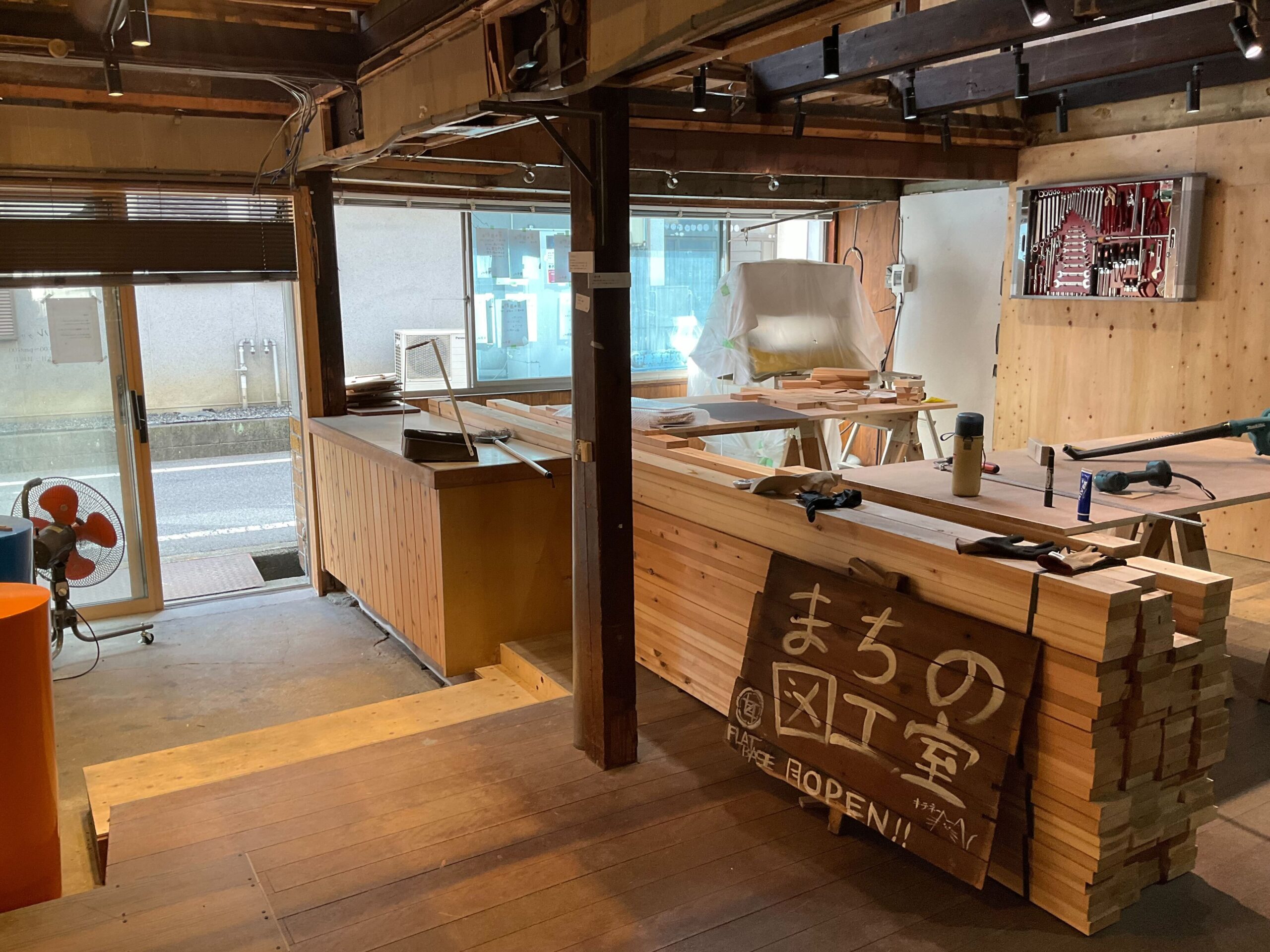
In Nabari’s Kyu-cho district, a former dry-cleaning shop with over 100 years of history has been regenerated into an everyday creative place where anyone can look, touch, make, talk, stay silent, take works home, and return.
What It Is
Machi no Zukoushitsu is not a new museum or a welfare facility. It is a community design project that uses one regenerated vacant shop as a circuit for reconnecting people, memories, works, and everyday places.
The issue
Many ageing communities face vacant buildings, weakened everyday ties, and growing unwanted loneliness. People may not ask for help, but still need meaning, roles, relationships, and places where they can simply be themselves.
The approach
The project helps people notice what moves them: a color, shape, sound, memory, material, or small “I like this” moment. That moment becomes making, conversation, a reason to walk through town, and an opportunity for mutual care.
How It Works
The project scales a circulation design, not a single facility. Creative participation begins with small emotional movement and spreads into daily life.
The Rururu Wall
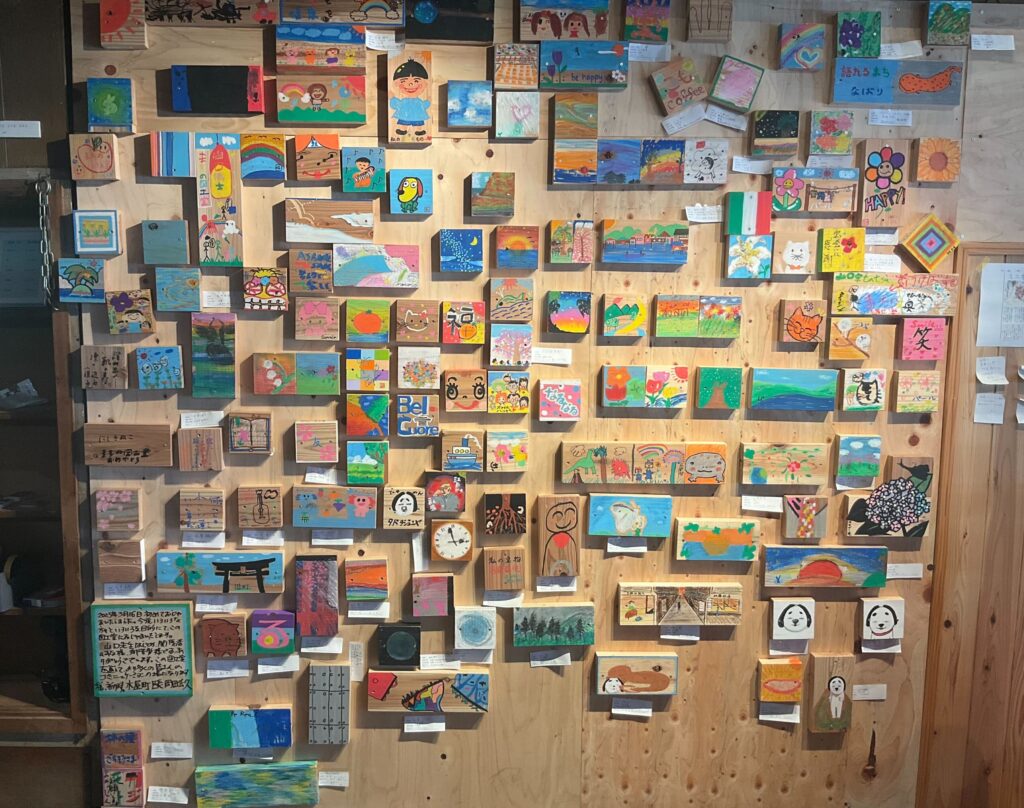
At Machi no Zukoushitsu, visitors create small wooden works and add them to the Rururu Wall. The wall grows as an accumulated record of participation, conversation, and care.
Town-wide Cultural Commons
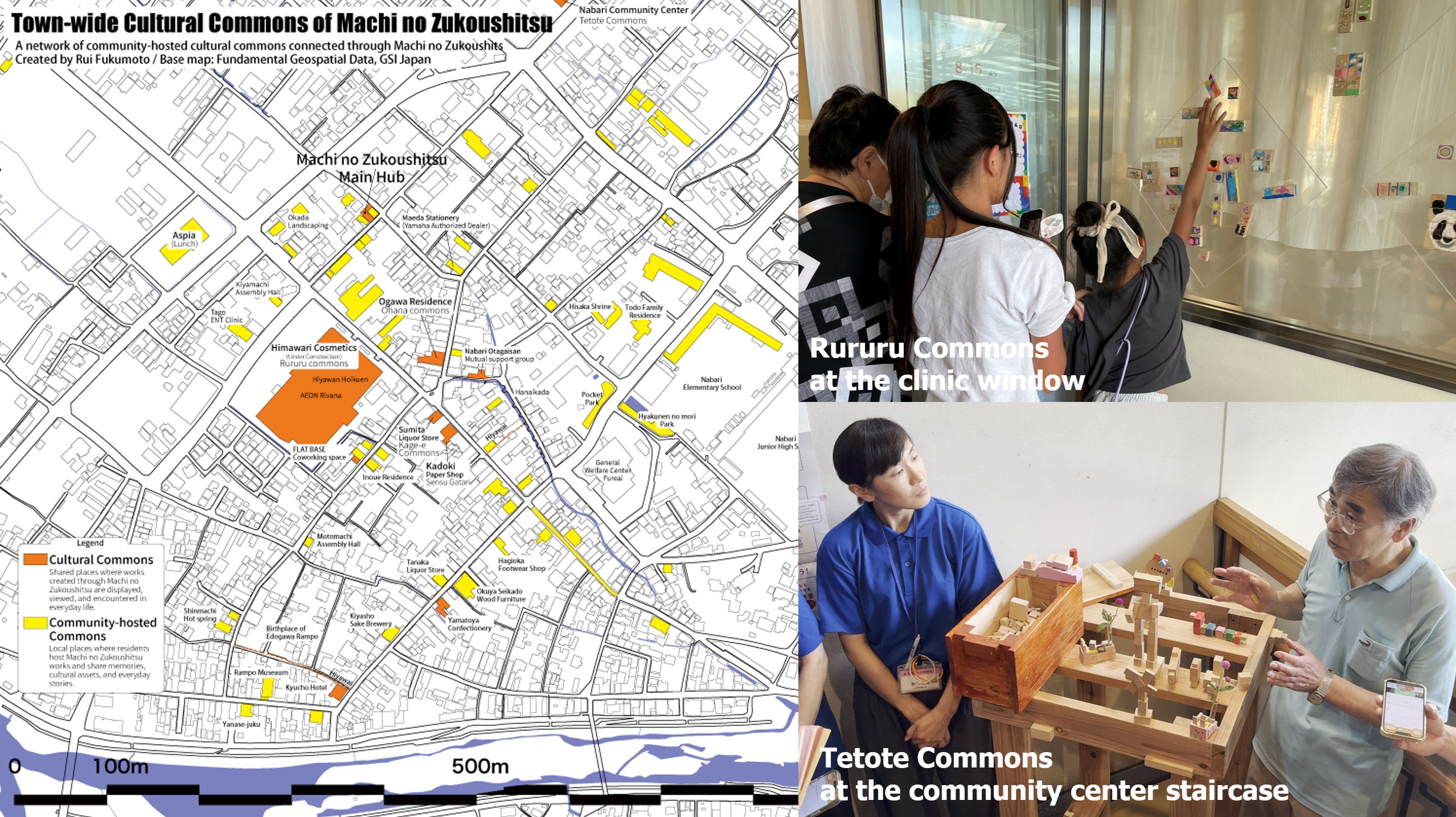
Works created through Machi no Zukoushitsu move into clinics, community centers, shops, homes, schools, and other everyday places. These cultural commons create reasons to visit, view, talk, and reconnect.
Impact Cases
Creative participation helped participants rebuild relationships, regain roles and dignity, and move from isolation toward connection in an ageing society.
Case 1: From being supported to supporting others
Woman in her 80s, living with dementia and depression.
At first, she visited with her family. By her sixth visit, her expression had softened and she began coming alone. When she encountered otedama, a familiar traditional beanbag activity, something moved her heart. She started helping others make things, shifting from being supported to supporting others.
Case 2: Meaning and dignity at the end of life
Woman in her 70s, living with heart disease and social withdrawal.
After heart disease led her to withdraw, another participant invited her to visit. Through making and conversation, she rebuilt connections and began caring about others’ happiness. Near the end of her life, she said, “Machi no Zukoushitsu was fun,” and expressed gratitude.
Project Timeline
2023.07–2023.12
Conducted field research in Nabari’s Kyu-cho district, including local event participation, oral-history interviews, and a survey of 180+ vacant houses; selected the former Pearl Cleaning dry-cleaning shop as the project site.
2024.01–2025.03
Regenerated the vacant shop through DIY renovation with students, local carpenters, residents, and community partners; developed participatory creative tools, take-home cultural prescription kits, and the Rururu shared wall.
2025.03–Present
Opened Machi no Zukoushitsu as an everyday creative space; recorded 2,000+ visits, users aged 0–94, 700+ shared works, 38 mobile sessions, 16 cultural prescription kits, and 70+ cultural commons.
2025.05–Present
Approved as an official project of the Nabari District Community Development Council and supported through resident-led community funding.
2025.04–2027.03
Adopted for Nabari City’s general preventive-care program for two consecutive years, connecting creative activities with age-friendly care, social participation, and community well-being.
Videos
Cultural Prescribing through Small “I like this” Moments
Nabari City Dementia Awareness Video
Partners and Cooperation
The project has been developed with local residents, shop owners, schools, community health and welfare partners, the Nabari District Community Development Council, Nabari City, students, university researchers, carpenters, and companies.
Recognition
Award
Best Video Award, Social Prescribing Video Contest, International Social Prescribing Conference 2026.
International relevance
The project has hosted study visits from ASEAN, the UK, Singapore, Taiwan, and other healthcare, design, and community-care partners.
Visit / Contact
Machi no Zukoushitsu is located at the former Pearl Cleaning shop in Nabari’s Kyu-cho district.
Address: 1369 Kiyamachi, Nabari City, Mie Prefecture 518-0723, Japan
For current opening hours and events, please refer to the Japanese website or contact the project team.